Cheng Man Ch’ing Tai Chi Chuan
Cheng Man Ch’ing (1901–1975), often called Professor Cheng, was a Chinese teacher, physician, painter, calligrapher and poet who played an important role in bringing tai chi to the West.
By removing many repeated movements, Cheng developed a shorter form while preserving the principles and character of Yang style tai chi. He taught tai chi as both a martial art and a practice for health, relaxation and self-cultivation.
The 37-Posture Form
The form is a continuous sequence of slow, relaxed movements incorporating shifts of weight, turns and changes of direction. With practice, students develop greater balance, coordination and body awareness, while learning to move with less unnecessary tension.
The movements themselves are only part of the practice. Cheng emphasized principles such as relaxation, upright posture, distinguishing substantial from insubstantial, turning from the waist, and maintaining softness and sensitivity in the hands and arms. These principles give the form its distinctive character and make it a practice that can continue to deepen over many years.
Our Tradition
Tai Chi Olympia teaches in the Cheng Man Ch’ing tradition. My own study began in San Francisco in 1976 with Benjamin Pang Jeng Lo, one of Cheng Man Ch’ing’s senior students. I later continued my study through Patrick Watson’s School of Tai Chi Chuan and the Tai Chi Foundation tradition.
Our emphasis is on learning the form carefully and gradually while developing relaxation, balance, awareness and the enjoyment of practice. The martial principles are part of the tradition, but our classes are not primarily martial-arts training.
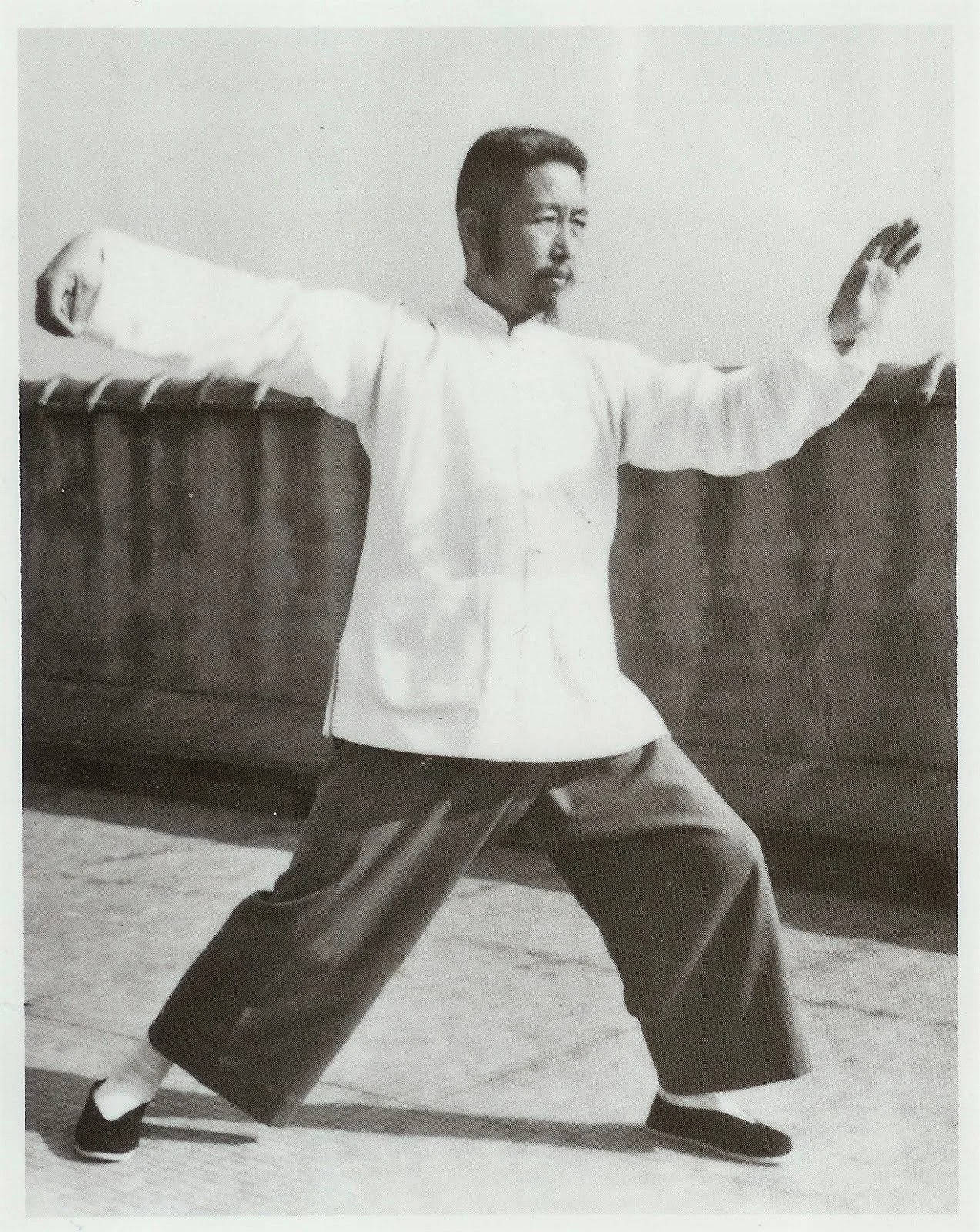
Cheng Man Ch’ing (1901-1975)